
Solutions for MUSEUMS, ZOOS, GARDENS & ATTRACTIONS
One visitor, four transactions and four systems that each saw a quarter of it.
She booked a timed-entry ticket, renewed her membership, added $50 at check-in and bought a mug. No single system recorded it all. Attractions run four revenue engines—admissions, memberships, donations and retail—on four systems that do not share a constituent record. That is why 55% of US museums still see fewer visitors than in 2019 while a third have lost government grants or contracts,[1] and why earned revenue is the hardest thing to see clearly. StoreConnect runs all four on standard Salesforce objects inside the org your board already trusts. No integration layer, no second data set, no invisible visitors through checkout.

Where the gaps are costing you today
Four systems, four partial records and a development team guessing which ticket buyers are ready to give.
Your booking fee competes with your donation ask
A surcharge and a request for $5 show up on the same screen. The gift loses.
Enterprise suites add a separate database and integration on top of the license.
Your ticketing vendor just changed owners
Two of this sector's independent platforms were acquired in the last nine months.
Reports that need a specialist
If only one person can build the board report, that's a staffing dependency, not a feature.
One visit, two disconnected systems
The gate knows she's a member. The gift shop has no idea.
Additional revenue you don't need to work for
A ticket buyer visits once. A member visits four times and brings someone.
There's no staff for this nine-month project
Consolidation doesn't happen because nobody has the year it used to take to do it.
StoreConnect feels more controlled… like the Apple ecosystem.
Every system stores part of the story. None of them sees the whole visitor.
Vendors sell integration as the product. That shows the pain.
Even big budgets do not fix it. After leaving Blackbaud Raiser’s Edge, the Guggenheim runs Salesforce for fundraising and Ticketure for admissions. A partner integration pushes data in near real time so staff can see tickets, events, memberships and gifts in one place.[2] That is the best case at a top attraction.
Smaller venues face the same silos with fewer staff: mismatched records, three definitions of “member” with sync failures, and staff back on spreadsheets.
StoreConnect does not sync into Salesforce. It runs in it. Admissions, memberships, donations and retail write straight to the same Accounts, Contacts, Products, Orders and Price Books. One visitor record is the design—not a nightly job that must succeed.
- Tickets, memberships, donations and gift shop on standard Salesforce objects
- No middleware, no second database, no sync window to monitor
- Works with NPSP, Agentforce Nonprofit or Salesforce core
- Every transaction can trigger Salesforce automation and Marketing Cloud journeys natively

A booking fee and your donation ask land on the same screen. Guess which one loses.
The commission platforms consolidating this sector charge around 6% per online booking, and on FareHarbor and Peek Pro that fee is typically added to the guest’s total as a visible surcharge rather than absorbed by the operator.[3] For a for-profit operator that’s a pricing decision. For a nonprofit venue asking that same visitor for a conservation donation two clicks later, it is working directly against you at the moment you need goodwill most.
StoreConnect charges you pennies on the dollar, not your visitor.[4]
- Nothing added to your visitor's checkout total
- Pennies on the dollar, capped for large transactions
- Keep your existing merchant, don't get locked in
- Published pricing, not quote-only

The license fee is only the start of what a second system costs
Neither enterprise platform publishes a price. Third-party data puts Blackbaud Altru at $12,000–20,000 a year for smaller venues, $25,000–55,000 for mid-size and $60,000–120,000+ at the top end, before implementation.[5] Tessitura serves more than 700 organizations handling anywhere from 20,000 to 6 million tickets a year.[6] Either way, you’re funding a second constituent database alongside the Salesforce org you already run, plus the integration that keeps the two in step.
StoreConnect runs inside the Salesforce org and licenses you already hold, so there’s no second database to buy, host or reconcile. The security certifications your board and funders ask about come as standard.



- No second database to license or host
- Runs on the Salesforce org and licenses you already hold
- SOC 2, ISO 27001, PCI DSS 4.0.1 and GDPR as standard
- One platform behind admissions, retail, programs and venue hire

Two of this sector's independent platforms changed hands in the last nine months
In late 2025 ROLLER raised another US$50 million to move upmarket.[7] Peek raised $70 million and bought ACME Ticketing and Connect&GO, folding a leading cultural platform into a commission model.[8] In April 2026 Ticketure acquired PatronManager, placing the sector’s largest Salesforce-native platform under a non-native owner.[9] From December 2025, donated Salesforce licences for nonprofits point to Agentforce Nonprofit instead of NPSP.[10]
Each move pulls data into proprietary platforms and away from the CRM your board already funds. StoreConnect does the opposite. Visitor data stays in your Salesforce org, on standard objects, under your contract. If you leave, the data stays exactly where it is.
- Your data stays in your org, on standard Salesforce objects
- No proprietary constituent database to be acquired out from under you
- Compatible with NPSP and Agentforce Nonprofit
- Native to Marketing Cloud, with no connector to re-license

StoreConnect is a bit of a beast in terms of functionality, and we haven’t even scratched the surface yet.
If only one person on staff can build the board report, that isn't a feature. It's a risk.
The main complaint about enterprise platforms is not capability—it is access. Reporting needs a specialist. Board and funder questions wait on one person’s calendar. When that person leaves, the reporting leaves too.
StoreConnect writes to standard Salesforce objects. Your reports are normal Salesforce reports. Anyone who can already build a report can build them. Attendance versus membership conversion, gift-shop basket by segment, donation attach rate by ticket type—all in the standard report builder. No new language. No overnight warehouse.
- Native Salesforce reports and dashboards, no separate BI tool
- Any admin who knows Salesforce can build them
- Live data, not last night's extract
- Abandoned cart, campaign attribution and staff-assisted orders included
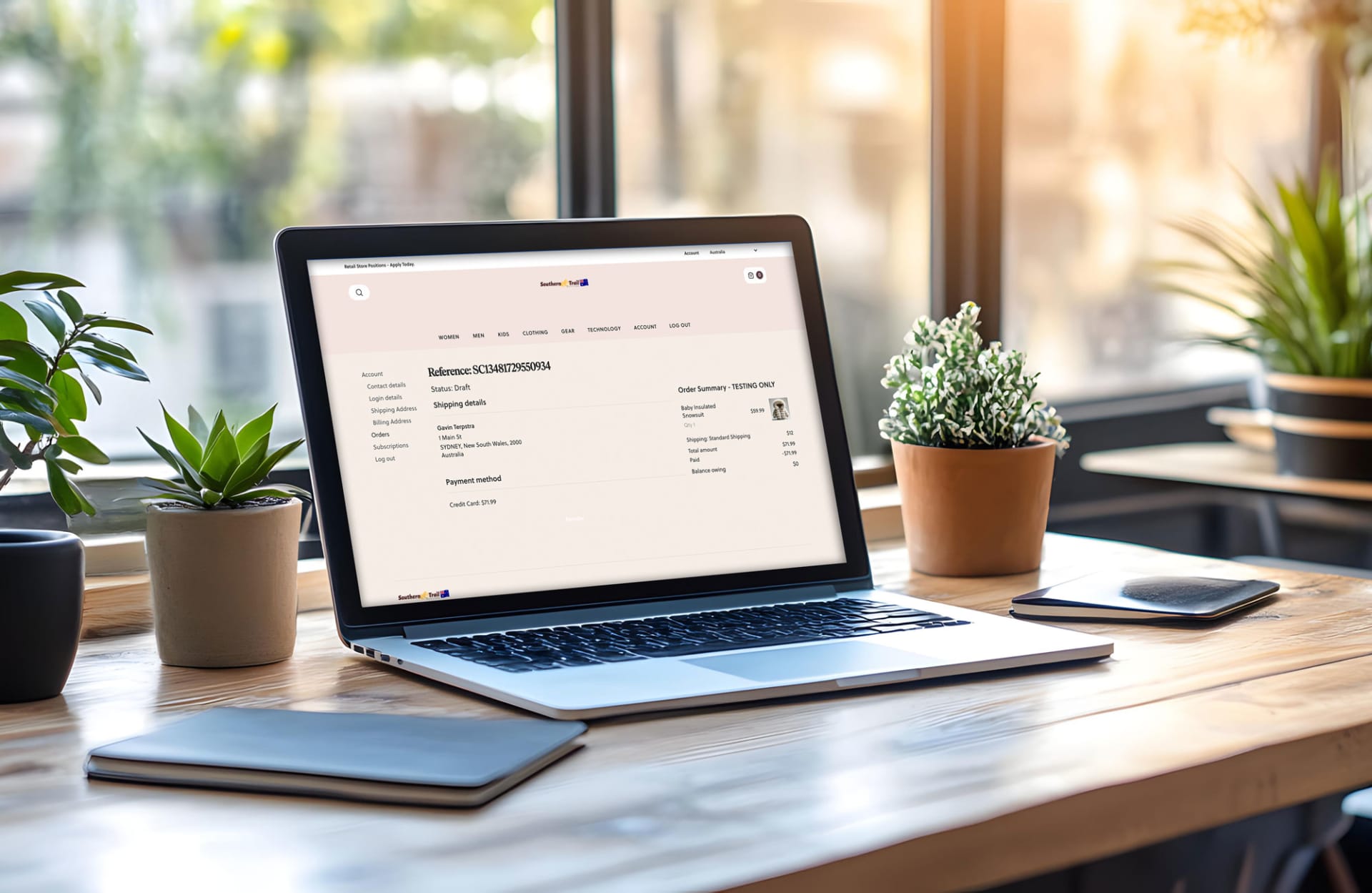
She's a member. The gate knows. The gift shop has no idea.
Member discounts calculated by hand at the counter. Stock counted twice because shop and web store disagree. No way to know if the mug buyer is the donor emailed last week. These small failures happen in public, hundreds of times a day.
StoreConnect is the only native Salesforce application for point of sale, eCommerce and loyalty on Salesforce core. The same member price books apply online and at the till. Stock is one number. Every transaction lands on the same account, so the gift-shop sale becomes part of her record—not a separate story to reconcile later.
- Registers, cash-drawer reconciliation and barcode hardware
- Member price books with precedence-based pricing, online and in person
- One stock pool across web store, gift shop and any second outlet
- Order parking, customer lookup, gift cards and vouchers across both channels

A ticket buyer visits once. A member visits four times and brings someone.
Turning admissions into memberships is the highest-leverage use of a visitor record. It is also the first thing that breaks when ticketing and CRM sit in separate systems—the upgrade offer must know what she already bought.
StoreConnect’s subscription engine is the most tested part of the platform. Membership levels carry their own price books. Renewals run automatically on fixed or evergreen terms. Members update their own cards in a self-service portal. Donations can be variable-price, one-off or recurring, on web or at the counter. Bundles can include bookable components, so a day pass with a keeper talk is one product and one record.
- Auto-renewing memberships, fixed-term or evergreen
- Member price books applied automatically online and at POS
- Self-service portal where members manage their own payment details
- Variable-price donations, one-off and recurring, web and POS
- Gift cards, loyalty points, deposits and group-rate promotions

A nine-month implementation assumes you have someone spare for nine months
You don’t. That is the real reason so many venues are still running a ticketing tool, a donor database, a membership spreadsheet and a card terminal. Nobody consolidated because nobody had the year it would take, and the project kept losing to the exhibition calendar.
StoreConnect’s agent platform changes the shape of that work. Our MCP API has already been demonstrated building a complete storefront from an empty Salesforce org through a human-approval pipeline. An agent proposes each piece of configuration and a person approves it. Paired with an attractions starter dataset, that means describing your venue and reviewing what gets built, rather than scoping a project. It is rolling out now, and founding venues get it as it lands.
- Agent-assisted setup with human approval at every step
- Attractions starter data: ticket types, membership levels, donation products
- Standard Salesforce objects throughout, so it stays upgradeable
- Automatic annual upgrades on every plan

References
- 2025 Annual National Snapshot of United States Museums. American Alliance of Museums. 55% of museums are seeing fewer visitors than in 2019; 34% have had government grants or contracts canceled; of those, 67% have replaced none of the lost funding. Survey of 511 museum directors, fielded July–August 2025. ↩
- Museum Membership Management, Ticketing, and Fundraising: A Journey from Blackbaud to Salesforce with the Guggenheim Museum. Cloud for Good. After migrating off Raiser's Edge, the Guggenheim runs Salesforce for fundraising with a partner-built Ticketure integration pushing admissions data into the CRM in near real time. Cited as sector evidence; the Guggenheim is not a StoreConnect client. ↩
- Booking System Pricing Guide for Tour Operators. Arival. Peek's standard fee is 6% for most bookings plus 2.3% + 30¢ card processing; FareHarbor's 6% is an industry estimate the company has not formally confirmed. Both are typically presented to the guest at checkout. ↩
- StoreConnect Pricing Plans. StoreConnect. Boutique from $1,095 USD per month billed annually; Shared Success Fee of 1% per transaction, 0.8% at POS, capped at $20 per transaction, with a 30¢ minimum per order. ↩ ↩
- Blackbaud Software Pricing & Plans. Vendr. Altru transaction data: approximately $12,000–20,000 per year for smaller venues, $25,000–55,000 for mid-size cultural organizations, and $60,000–120,000+ for larger venues. Blackbaud does not publish pricing. ↩
- How Tessitura Ticketing Software Helps Cultural Arts Organizations Increase Revenue. Urban Insight. More than 700 organizations used Tessitura as of 2022, ranging from 20,000 to 6 million tickets per year. ↩
- ROLLER Secures US$50 Million to Invest in Next-Generation Technology for Leisure and Attractions Venues. ROLLER, 22 October 2025. Second $50M round led by Insight Partners with J.P. Morgan participating; Insight also led a $50M round in November 2023. ↩
- Peek Acquires ACME Ticketing and Connect&GO; Raises $70M. Peek, 20 November 2025. ↩
- Ticketure Acquires PatronManager to Unify Best in Breed Ticketing and CRM. Ticketure, 21 April 2026. ↩
- Evolving the Power of Us: From NPSP to Agentforce Nonprofit. Cloud for Good. From December 2025 the pre-configured NPSP option was removed from the Power of Us program and new applicants are offered Agentforce Nonprofit licenses. NPSP itself remains supported. ↩