
Why "fake integrations" break as you scale
One of the most interesting things I have seen over the years with growing businesses is a very specific pattern. They start on a small, retail-first platform and it’s perfect, for a while. You find the plugin you need, it works and you are off to the races.
But then, you grow. And that’s when you start to see the cracks in what I call “fake integrations.”
You know the ones I’m talking about. They look like they’re out-of-the-box. They’re simple. You turn them on and all these different products are suddenly “talking” to each other. Except, they aren’t talking in the way your business actually needs.
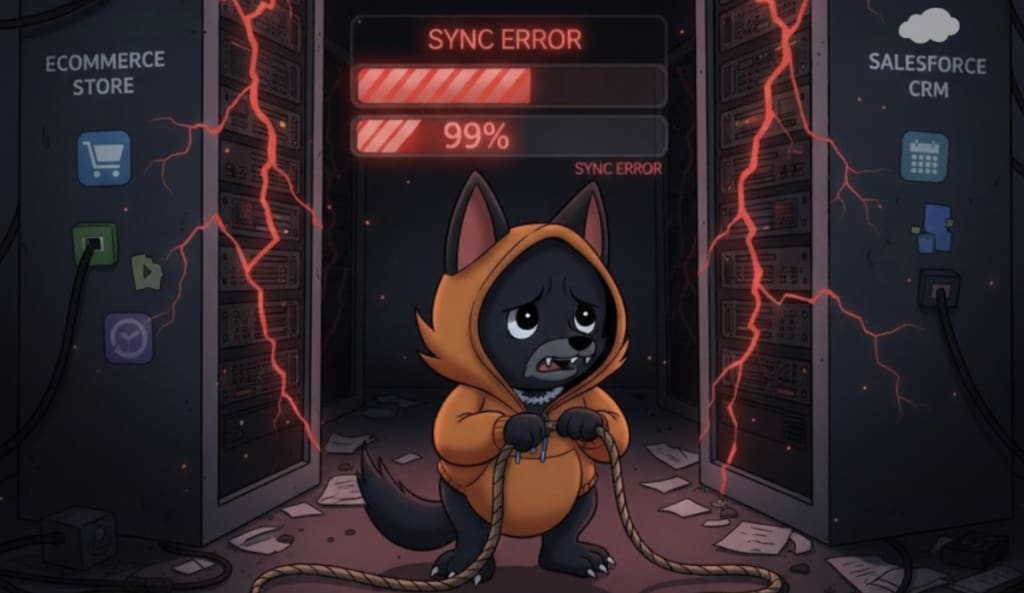
When these simple integrations fail, most companies look toward big, expensive middleware platforms like MuleSoft to bridge the gap. Don’t get me wrong, those tools are powerful, but they require massive technical expertise and a budget to match.
The alternative is picking a platform that is a single source of truth from day one. When your commerce is first-party, meaning it lives natively where your data lives, it can scale with you through every degree of complexity.
With a native Salesforce solution, you can start with point-and-click, no-code simplicity. As you get bigger, you can move to low-code or even go right into Apex to program exactly what you need. But at every stage, the integration actually works. You aren’t going to find the cracks because there is no “gap” for the data to fall through.
You should not have to retrain your staff to become Excel spreadsheet experts just to manage your orders. You should be able to put the right people on the right tasks, knowing your data is correct, extensible and scalable.
Stop papering over the cracks in your tech stack and book a demo to see the power of native commerce.