When both integrated systems want to lead, someone will trip
In my last blog, I talked about the ‘integration trap’ and how it strangles business growth. But if you want to know what that trap actually looks like in the real world, you have to look at the data.
It’s easy for a salesperson to say their tool ‘works with’ other tools. It’s much harder to make it actually happen. I’ve seen so many founders and CEOs run into massive headaches trying to force a ‘best of breed’ stack, like trying to connect Shopify with Salesforce and have it behave. They want a CRM to track their clients but they run the actual business on a separate eCommerce platform.
The problem is that you end up with two systems trying to be the boss. It’s like having two people who both want to lead trying to dictate how to dance. You simply cannot have two leaders; someone is going to trip.
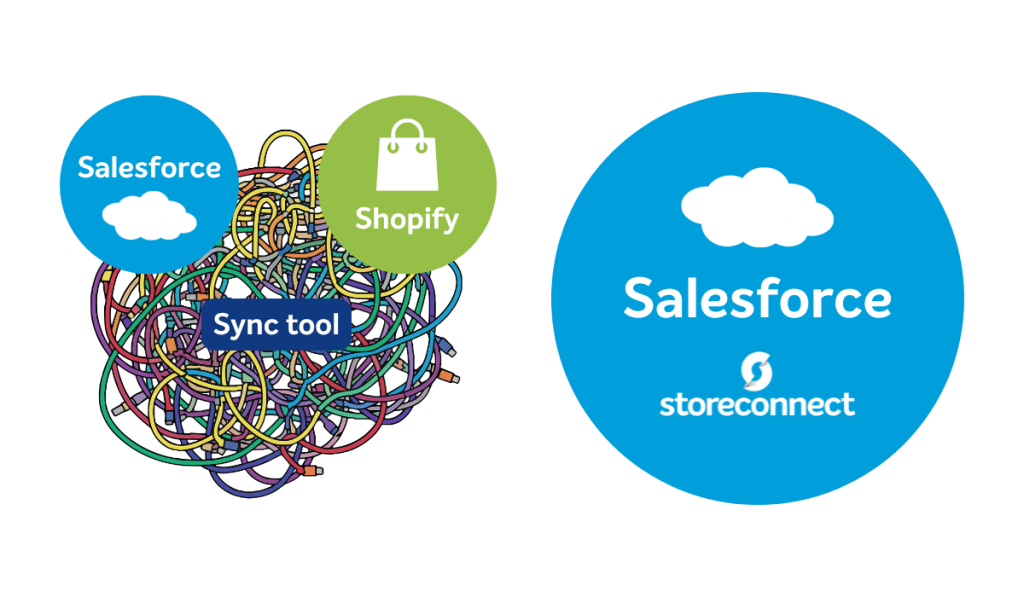
Here is what it looks like when the systems trip over: A client placed an order on the website and then updated their address. Just a few seconds later, the synchronization tool put the old data back over the newly updated address.
When the client checked, the old address was still showing. The company fixed it on the back end but seconds later, Shopify re-synced the old address again. The client ended up updating their address on the website twice and calling the company once, yet the order still went to the wrong address.
This kind of failure happens because of complex, multi-platform integrations.
That experience is precisely one of the things StoreConnect solves. It’s a single system. And not just one system; it is one data model. When you only have one source of truth, these integration nightmares simply vanish.
When you have one data model, you aren’t ‘syncing’ data, you are just using it. It sounds like a small distinction but for the customer whose order went to the wrong house, it’s everything.
Ready to simplify your business and end integration nightmares? See how StoreConnect creates a single source of truth for your data.