The architect’s masterclass: Why native commerce is the future of Salesforce strategy
What happens when a Salesforce Certified Technical Architect (CTA) sits down with a founder who has over 680 million software downloads to his name? You get a masterclass in architectural discipline.
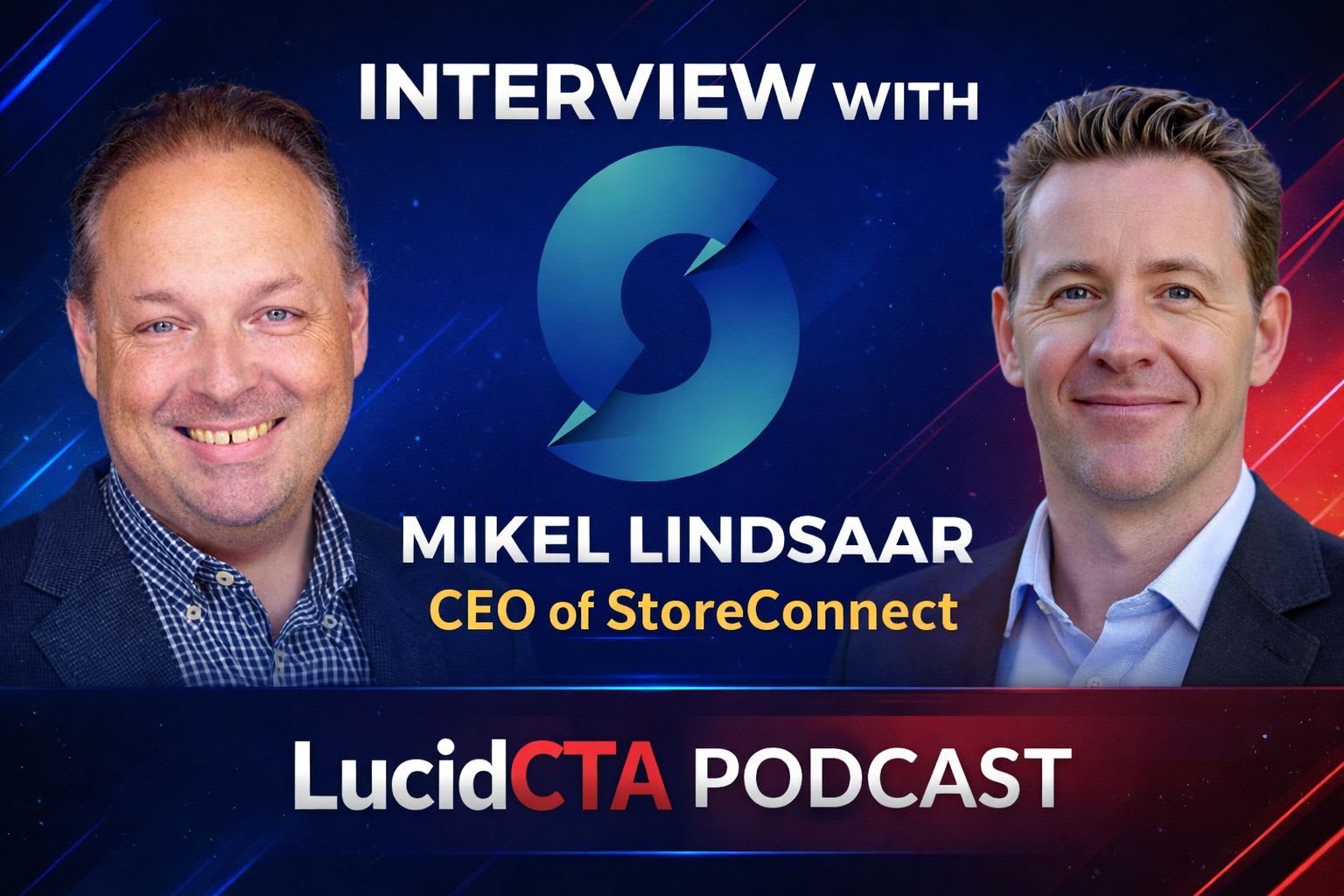
In a recent episode of the LucidCTA podcast, host Svet Voloshin interviewed Mikel Lindsaar, CEO and founder of StoreConnect. They talked about moving beyond marketing fluff to tackle the hard realities of synchronization, the “Thanos Trap” of data silos and why the future of AI depends on standard Salesforce objects.
The discipline of core objects
One architectural principle Mikel refused to compromise on when building StoreConnect commerce was the use of core Salesforce objects. While many managed packages create hundreds of custom objects, StoreConnect was built on the standard Sales Cloud foundation: Account, Contact, Product2, PricebookEntry and Order.
“It was probably one of the hardest architectural builds I have ever done,” Mikel admitted. “But every architect I talk to, when I list out those core fields, they go, ‘Oh, finally.’”
Understanding the pain of Salesforce’s strict internal logic, like the lack of triggers on price book entries, StoreConnect was built to address this. The native approach means your commerce data is not just “synced”, it is standard Salesforce data that inherits all existing security, permissions and governance.
Escaping the “Thanos Trap”
A major highlight of the discussion was the “Thanos Trap.” Named after the Marvel villain who can change reality with a single snap of his fingers, the name also serves as a sharp acronym: “Technically Handicapped And Not Operating Synchronized”. This term describes a state where a business becomes technically handicapped because its systems are not operating in a synchronized way. You click your fingers to execute a strategy and find that nothing happens.
Most businesses today operate with a CRM at the center but surround it with disconnected silos: a website platform here, an accounting system there and a point of sale system somewhere else. Each connection creates a “blue circle” of data isolation. As these circles multiply, the ability to maintain the platform plummets exponentially.
StoreConnect erases these silos by running the website, eCommerce and POS directly inside Salesforce. When you remove the middleware, you remove the “integration tax” and ensure your data foundation is actually ready when you are.
AI readiness: Garbage in, garbage out
The conversation naturally turned to Agentforce and the rise of autonomous agents. Mikel was clear: “What makes a commerce implementation AI ready versus AI fragile is whether the data is saved straight into Salesforce.”
Because StoreConnect uses standard objects, an Agentforce agent does not need a complex Data Cloud layer to “see” your commerce data. Mikel shared an experiment where an admin built an agent interaction, capable of looking up orders and querying events, in just two days.
If your data is grounded in your actual Salesforce records rather than a delayed sync from an external platform, your AI agent operates with confidence. It won’t guess because it is looking at the truth.
The “Plan B” for Heroku
Architects have been closely watching the news regarding Salesforce’s Heroku roadmap. Mikel addressed this head-on, explaining that StoreConnect has been preparing for these shifts for over a year.
While StoreConnect currently uses Heroku Connect for its high-speed synchronization, the architectural decision to keep Salesforce as the 100% source of truth means the front end can run anywhere. Whether it is Heroku, AWS or a private server, the “Native Navigator” remains the same.
A blueprint for new Salesforce professionals
For those looking to break into the ecosystem, Mikel offered a practical recipe:
-
Learn the fundamentals: Do the certification at the StoreConnect Academy to understand how commerce, POS and CMS work on Salesforce. It’s practical, instructor led training and free to do.
-
Find a nonprofit: Identify a mission-driven organization that qualifies for the Salesforce Power of Us program.
-
Build a case study: Replace their fragmented systems with StoreConnect. Save them thousands in license fees while building a professional portfolio that proves you can architect for growth.
Ready to see a truly unified Salesforce ecosystem? Book a StoreConnect demo today.
This blog post was adapted from the LucidCTA Podcast, hosted by Svet Voloshin. You can listen to the full interview with Mikel Lindsaar here.